Whether you’re renovating your home, clearing out a garage, or managing a large landscaping project, waste can accumulate quickly. Having a practical way to collect and dispose of unwanted materials helps keep your property organized and your project moving forward. One option worth considering is hiring a skip bin, which provides a designated space for waste until it’s ready for collection.
However, choosing the right bin involves more than finding a container and arranging delivery. You’ll need to consider the amount and type of waste, the available space on your property, and the collection schedule.
Understanding these details can make skip bin hire a straightforward and convenient solution for managing waste during projects of different sizes.
Understand What You Need the Skip Bin For
Before booking a skip bin, think about the type of project you’re undertaking and the materials you expect to discard. Household cleanouts, construction work, garden maintenance, and commercial projects can all generate different kinds of waste.
For example, a spring clean might produce old furniture, broken household items, and general rubbish. A renovation could involve timber, plasterboard, tiles, and other building materials. Landscaping work may generate branches, leaves, grass clippings, and soil.
Identifying your waste types helps you choose a service that can accommodate your disposal needs. Some providers offer bins for general waste, green waste, construction debris, or mixed materials, while others have specific requirements for particular items.
It’s also important to check which materials are prohibited. Batteries, chemicals, asbestos, paint, and electronic waste may require specialized disposal arrangements. Never assume that every item can go into a standard skip bin.
Contact your provider before booking if you’re unsure about a particular material. Confirming these details early can help prevent additional charges or delays when your bin is collected.
Choose the Right Skip Bin Size
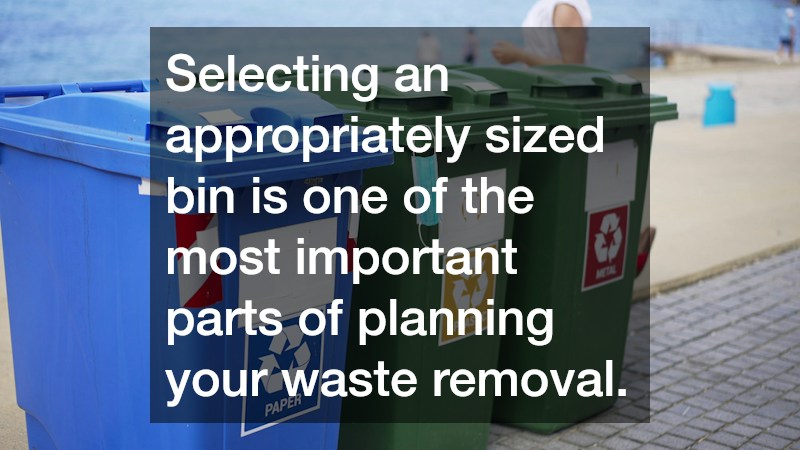
Selecting an appropriately sized bin is one of the most important parts of planning your waste removal. A bin that’s too small may fill up before your project is finished, while an unnecessarily large option could cost more than you need to spend.
Start by estimating how much waste your project will generate. A small household decluttering job may only require a compact bin, whereas a major renovation or commercial cleanup could need a substantially larger capacity.
When comparing options, ask the provider to explain the available sizes and give examples of the projects they’re suited for. If you have bulky items such as furniture or large branches, remember that these can take up considerable space even when they aren’t particularly heavy.
Weight limits matter, too. Materials such as concrete, bricks, soil, and tiles can become very heavy in large quantities. A bin might have enough physical space for these materials but still exceed its permitted weight limit.
If you’re uncertain, describe your project to the hire company and ask for a recommendation. An experienced provider can help you balance capacity, waste type, and budget.
Compare Hire Costs and Inclusions
Prices can vary between providers, so it’s worth comparing several quotes before making a booking. However, the cheapest advertised rate doesn’t always represent the best overall value.
Ask what the quoted price includes. Depending on the provider, the fee may cover delivery, collection, disposal, and a set hire period. Other charges could apply if you exceed the weight allowance, keep the bin longer than agreed, or dispose of restricted materials.
Clarify the hire period before confirming your booking. If you’re working with contractors or managing a renovation yourself, consider whether the scheduled collection date gives you enough time to finish the work.
It’s also useful to ask how extensions are charged and what happens if the bin needs to be collected earlier than expected.
A clear, written quote makes it easier to compare services fairly and understand your financial commitment. When arranging skip bin hire, look for transparent pricing, clear conditions, and a provider willing to explain its policies before you commit.
Plan Where the Bin Will Be Placed
The location of your skip bin can affect how easily you complete your project. Ideally, it should be close enough to the work area to make loading convenient without obstructing essential access around your property.
Before delivery, measure the available space and check that the truck can safely reach the proposed location. Consider driveways, gates, overhead branches, parked vehicles, and access needed by other people using the property.
If you plan to place the bin on a public road, footpath, or other council-controlled area, you may need a permit. Requirements vary by local council, so check the relevant rules before arranging delivery.
You should also consider the surface beneath the bin. A heavy container can affect certain surfaces, particularly when filled with dense building materials. Ask the provider whether protective boards or other precautions are recommended.
Planning the placement in advance can help prevent delivery complications and make the bin easier to use throughout your project.
Load the Bin Safely and Efficiently
Once your skip bin arrives, thoughtful loading can help you make the most of its capacity. Start by placing heavier materials carefully and distributing their weight evenly, following the provider’s loading instructions.
Break down bulky items when it’s safe and practical to do so. Flattening cardboard, dismantling suitable furniture, and arranging materials neatly can help reduce wasted space.
Avoid placing prohibited waste inside the container, even if there’s room available. Mixing restricted materials with general rubbish can create disposal problems and may result in additional fees.
Safety should remain a priority throughout the loading process. Wear appropriate protective equipment, use safe lifting techniques, and ask for assistance with heavy or awkward objects. Never climb into an unstable pile of rubbish or attempt to move materials beyond your physical ability.
Most importantly, don’t overload the bin. Waste should remain within the designated fill line, and nothing should protrude above the container’s permitted height. Overfilled bins may not be safe or legal to transport, potentially delaying collection.
Book Collection and Confirm Disposal Arrangements
Before your hire period ends, arrange collection with your provider and confirm the expected pickup date. If your project schedule changes, contact the company as soon as possible to discuss alternative arrangements.
You may also want to ask what happens to the waste after collection. Some materials can be sorted for recycling or recovery, depending on their condition and the provider’s facilities. Separating suitable waste streams before disposal may help reduce the amount sent to landfill.
Keep your booking details and any relevant instructions accessible until the bin has been removed. This makes it easier to resolve questions about collection times, additional charges, or disposal requirements.
Make Your Next Cleanup Easier
Hiring a skip bin can simplify waste management for home renovations, property cleanouts, landscaping, and commercial projects. The key is to plan ahead, select the right size, understand pricing, prepare a suitable placement area, and follow the provider’s loading requirements.
By comparing providers and confirming important details before delivery, you can avoid common complications and keep your project organized. Reliable skip bin hire gives you a convenient way to manage unwanted materials while maintaining a safer, tidier work area.
Before booking, speak with a local provider about your project, expected waste, and preferred schedule. With the right preparation, you can choose a suitable service and focus on completing your cleanup efficiently.